ALPENROSE CONDO
A reworking of a 1970s ski chalet tucked into the Pacific Northwest mountains.
Originally built as a retreat in the 1970s for early ski-club activity at Snoqualmie Pass, the condo had good bones but felt dark, outdated and cluttered from previous remodels. The goal wasn’t to reinvent it, but to strip it back and let it breathe a bit by simplifying the palette and making it feel more aligned with the owner's sensibilities.
This project also had a personal layer to it. The owner and architect grew up together, hanging out at the lake, skateboarding, and snowboarding before going separate directions as life got busy. The owner became an industrial designer, the other an architect. Years later, this became a way to reconnect and make something special together.
-
SITE
Set within a small mountain community, the condo sits at the edge of a clear rushing creek and dense evergreens with filtered views of the surrounding terrain. It’s quiet, a little tucked away, and very much about being in mountains rather than looking out over them. The best part - you can ski in and ski out!
PROGRAM
At just under a typical chalet scale (399 SF), the space needed to do a lot without feeling overworked.
The focus was on reducing visual clutter, improving flow, and building in as much functionality as possible - storage, seating, sleeping - so the space feels cohesive rather than layered with stuff. It needed to work for solo weekends, but also comfortably hold a few friends coming back from the mountain.
The collaboration between architect and owner (as an industrial designer) shaped a lot of the decisions. There was a shared interest in restraint - doing fewer things, but doing them well - and a lot of back and forth around how things are detailed, how materials meet, and how the space feels day to day.
DESIGN
The approach was pretty straightforward: remove what wasn’t working and refine what remained.
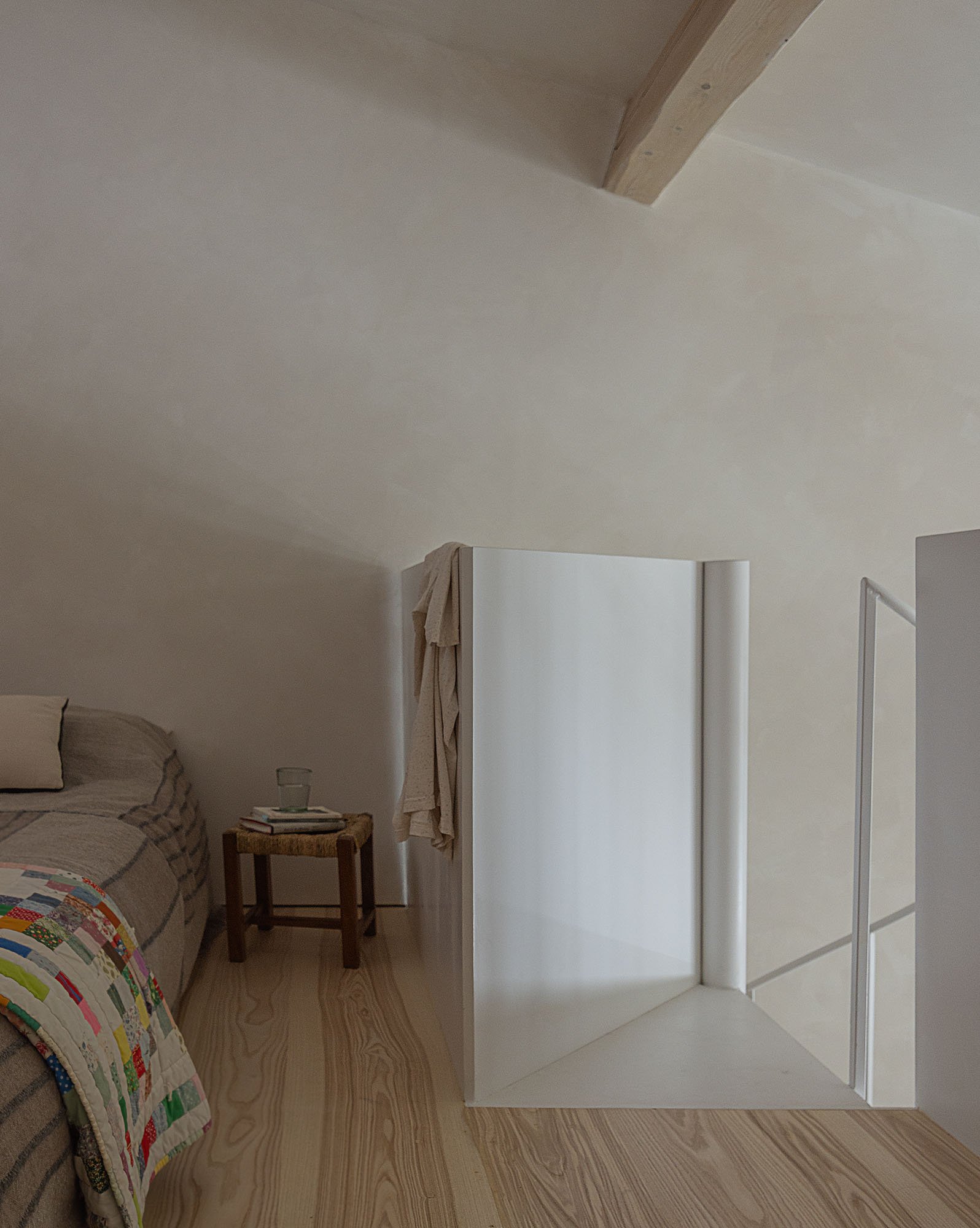
The existing circular stair was salvaged and incorporated into a new cantilevered loft with steel plate guardrail to create more ceiling height below, allowing light to move deeper into the plan. Openings were maintained and trimmed out to frame a soft connection to the landscape.
Material was the main driver. A tight palette of ash plywood, plaster, lime paint, and simple, durable finishes keeps things quiet and grounded. The custom plywood layups are used intentionally with expressed thickened edges, clean joinery, and moments where it shifts between movable casework and finish. It’s less about decoration and more about how things are put together.
Built-in cabinets do most of the heavy lifting for organization and aesthetics. Integrated storage, a compact kitchen, and open sleeping area that make the small footprint feel more generous. Everything is designed to feel open and cohesive like it belongs, rather than added on.
There’s a balance between the two disciplines throughout. For instance, spatial clarity from the architecture side, and a level of precision and tactility from the industrial design side.
Rooted in shared history and a mutual love of thoughtful, tactile design, the project isn’t trying to make a statement. It’s a quiet, grounded retreat with warm wood under hand, soft light moving through the space, everything in its place. A spot to land before or after a day in the mountains and where a cold snack tastes a little better.